
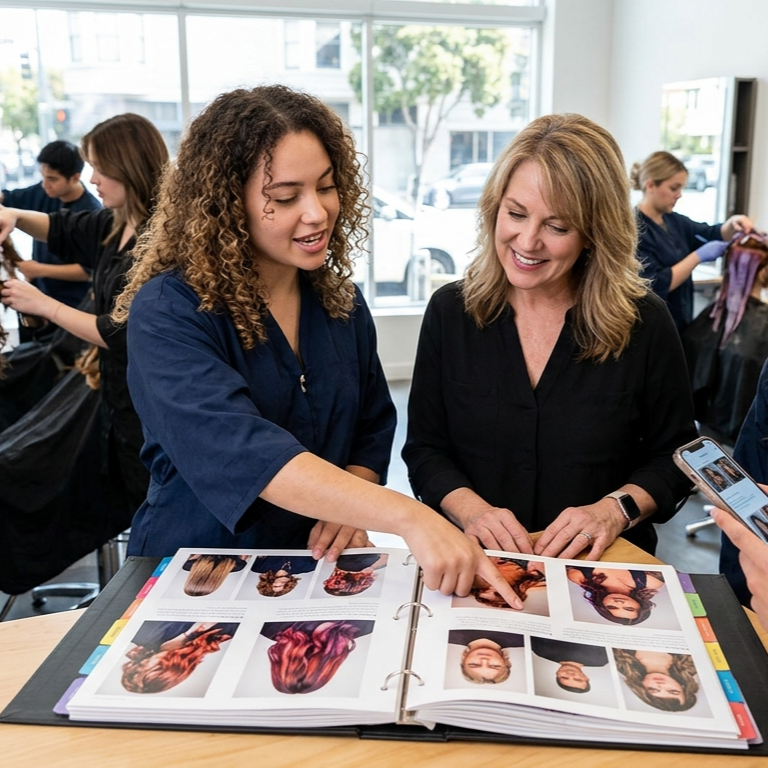
A cosmetology portfolio does something a traditional resume simply cannot: it shows, rather than tells, what a stylist can actually do. Specifically, a resume lists completed coursework and prior experience, but it says nothing about technique, style, or range. As a result, clients and employers in this industry rarely make decisions based on a printed document alone.
Therefore, understanding how to build a portfolio that actually influences hiring and booking decisions matters just as much as the technical skills behind it. Ultimately, a strong portfolio functions less like a formality and more like a sales tool.
Why a Resume Falls Short in the Beauty Industry
Generally, a resume works well in industries where past job titles and responsibilities predict future performance. However, cosmetology doesn’t work that way. Specifically, a client considering a new stylist wants to know what their hair, skin, or nails will actually look like afterward, not which classes a candidate completed.
As a result, a resume alone tends to leave both clients and potential employers without the information they actually need to make a decision.
What a Strong Cosmetology Portfolio Actually Includes
Fortunately, building an effective portfolio doesn’t require anything complicated. It requires the right combination of visual proof and context.
Real Work, Not Just Best Work
Specifically, a portfolio should demonstrate range, not just a handful of perfect results. Additionally, showing a variety of services, cuts, color techniques, styling, or skincare treatments, gives viewers a clearer sense of overall capability rather than a single highlight.
Before-and-After Context
Furthermore, before-and-after photos tend to carry more persuasive weight than after-only shots. Specifically, they demonstrate transformation, which is often the exact outcome a prospective client is hoping for.
Education and Background, Presented Visually
Additionally, a strong portfolio still includes education and background information, similar to a resume, but presented in a way that supports the visual work rather than replacing it. As a result, viewers get both the proof and the credentials in one place.
Where a Portfolio Belongs Once It’s Built
Generally, a portfolio only works as hard as its visibility allows. Specifically, a portfolio buried in a phone’s camera roll does little good. Therefore, pairing a portfolio with a personal website and active social media ensures that prospective clients or employers can actually find and browse it, rather than requesting it individually.
Building This Before You Ever Graduate
Now that you understand why a cosmetology portfolio matters more than a traditional resume, the next step is building one early, throughout training, rather than assembling it hastily after graduation. In San Francisco, Cinta Aveda Institute’s Social Modern Media Marketing course was designed specifically around this need.
Throughout the program, students build a digital portfolio showcasing their work, education, and background, structured specifically to win over both clients and potential employers. Additionally, this portfolio connects directly to each student’s personal website and their established review history, giving viewers a complete picture in one place rather than scattered across different platforms.
Students traveling from across the Bay Area, whether by BART or from within downtown San Francisco, find this hands-on approach to portfolio-building a highly valued part of their training. Furthermore, enrollment options, including financial aid for those who qualify, help make this training accessible at different stages of a student’s career.